
Live Betting
 Available in US

The puck drops, and suddenly everything you thought you knew about a game starts shifting. A heavy favorite falls behind early. A backup goaltender makes save after spectacular save. A star player takes an awkward hit and heads to the locker room. Live betting transforms these moments from passive observations into active opportunities, letting you react to what is actually happening rather than what you predicted hours before the game began.
Live betting, also called in-play or in-game betting, has revolutionized how people wager on hockey. Instead of locking in your positions before the opening faceoff and hoping events unfold as expected, you can now bet throughout the entire game as odds adjust in real time. This dynamic environment rewards bettors who can process information quickly, recognize when the market has overreacted to recent events, and maintain discipline when the temptation to chase losses becomes strongest.
The NHL presents unique live betting opportunities because hockey games shift momentum rapidly and unpredictably. A two-goal lead can evaporate in minutes. A dominant performance can flip when a goaltender gets pulled. Power plays create sudden spikes in scoring probability that pregame markets cannot anticipate. Understanding how to navigate these dynamics separates successful live bettors from those who simply add variance to their gambling without adding edge. This guide covers everything you need to know about betting on NHL games as they happen in 2026.
See also in-play betting strategies.
How Live NHL Odds Work
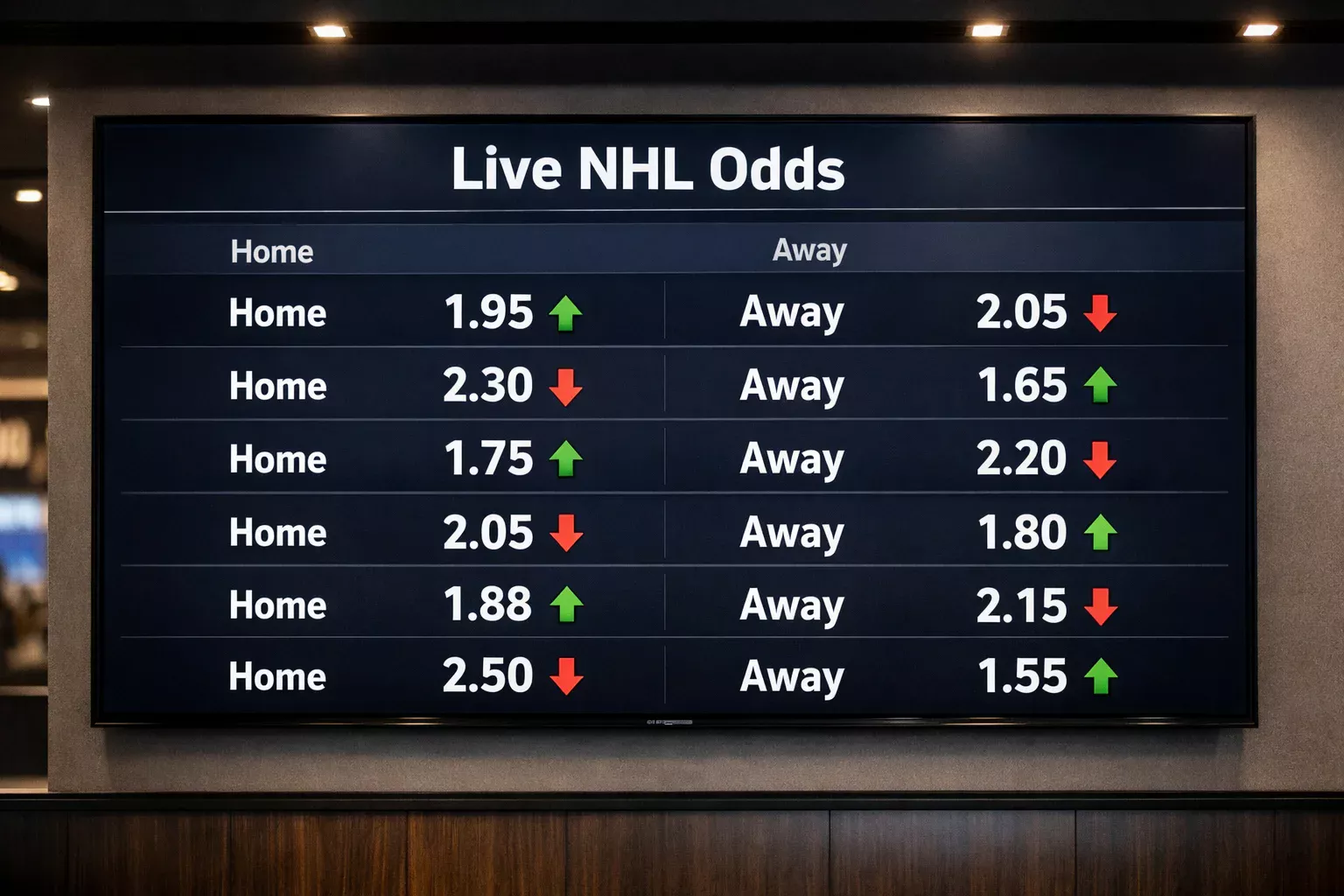
Live odds function on the same principles as pregame lines but update continuously based on game events and time remaining. Understanding how sportsbooks calculate and adjust these odds helps you identify when the market presents value and when it has priced the situation accurately.
The foundation of live odds involves the current score, time remaining, and each team’s pregame probability. If a team was -150 pregame favorites and they score first to lead 1-0 after the first period, their live moneyline will shorten significantly, perhaps to -250 or beyond. The market is repricing their win probability based on new information: they have the lead and demonstrated they can score against this opponent. Conversely, the underdog’s odds lengthen from +130 to perhaps +200, reflecting their diminished position.
Time remaining affects live odds in predictable ways. A one-goal lead with five minutes left in the first period means something very different than a one-goal lead with five minutes left in the third. The same score produces dramatically different live odds depending on when it occurs. Early in games, odds adjust more moderately because plenty of time remains for the score to change. Late in games, odds move more aggressively because less time remains to alter the outcome.
Sportsbooks also incorporate game flow metrics beyond the simple score. If a team trails 1-0 but has dominated shot attempts, scoring chances, and territorial play, their live odds might not lengthen as much as the score alone would suggest. Sophisticated live betting algorithms account for underlying performance to avoid overreacting to lucky goals or unsustainable play. However, these adjustments are imperfect, and bettors who track game flow independently can identify discrepancies between what the odds suggest and what the eye test reveals.
The speed of live odds adjustments varies by sportsbook and situation. Major events like goals trigger immediate line freezes while the book recalculates, then odds reopen at new levels. Minor events like shots on goal or penalties might produce gradual adjustments rather than sudden freezes. Understanding your sportsbook’s timing patterns helps you anticipate when betting windows open and close, which matters when you are trying to capture specific prices before they disappear.
Available In-Game Markets
Live betting extends beyond simple moneylines to include most of the same markets available pregame. Knowing which markets are available and how each behaves during live play helps you match your predictions to the appropriate betting vehicles.
Live moneyline represents the most straightforward in-game bet: pick the winner based on current circumstances. If you believe a trailing team will come back, betting their live moneyline at extended odds captures that belief. If you think a leading team will hold on despite looking vulnerable, their shortened odds might still offer value if the market has overreacted to game flow. Live moneylines require predicting the final outcome, making them suitable when you have conviction about who wins regardless of the current score.
Live puck line betting applies the standard 1.5-goal spread to current game circumstances. A team leading 2-0 might be -1.5 at much shorter odds than pregame because they only need one more goal than their opponent scores. A team trailing 2-0 at +1.5 gets better odds than pregame but faces the challenge of closing a two-goal gap to within one. Live puck lines reward predictions about margin of victory rather than just the winner, and they interact with empty net dynamics late in games.
Live totals adjust based on current scoring and time remaining. If a game is 4-3 after two periods, the live total might be set at 8.5 or 9.5, asking whether more goals will come in the third period. These markets essentially become period totals for the remaining time, though they settle based on the final game score rather than period-specific results. Live totals reward predictions about game pace and whether the current scoring rate will continue, increase, or decrease.
Next goal scorer markets offer high-variance opportunities throughout the game. You can bet on which specific player will score the next goal, with odds similar to first goalscorer markets but adjusting based on who is on the ice and game circumstances. These bets require quick execution because odds freeze whenever play stops and goals become imminent. Next goal scorer appeals to bettors who believe they can predict which line or player will capitalize on developing opportunities.
Period betting markets isolate remaining periods for separate wagering. If you believe a team that struggled in the first period will dominate the second, you can bet them on the second period moneyline or total without the first period results affecting your bet. Period markets provide granularity that full-game live bets cannot match, making them valuable when your prediction applies to specific timeframes rather than the overall outcome.

Key Moments for Live Betting
Certain game situations create predictable betting opportunities that savvy live bettors learn to recognize and exploit. These moments represent the highest-value windows for in-game wagering because the market often struggles to price them accurately in real time.
Power plays create immediate shifts in scoring probability that live odds try to capture but often miss. When a team goes on the power play, their chances of scoring in the next two minutes increase dramatically compared to even-strength play. Elite power play units convert at rates exceeding 25%, meaning roughly one in four power plays produces a goal. If you believe a specific power play will score, betting before the market fully adjusts captures value. Conversely, if you believe a penalty kill unit will hold, the defending team’s live odds might offer value during the disadvantage.
The timing of power play betting matters significantly. Odds adjust as soon as the penalty is called, but the full adjustment takes seconds to minutes depending on the sportsbook. Bettors who can identify penalties as they happen and act immediately get better prices than those who wait. Watching games live rather than following on delay provides crucial timing advantages for power play betting. Additionally, the type of penalty matters: a five-minute major creates different dynamics than a two-minute minor, and double-minors offer extended opportunities.
Pulled goalie situations in the final minutes of close games create unique live betting dynamics. When a trailing team pulls their goaltender for an extra skater, their chances of tying the game increase, but so do their chances of surrendering an empty net goal that extends the deficit. Live odds during pulled goalie situations whipsaw rapidly as scoring chances develop. The leading team’s puck line value increases because empty net goals frequently push one-goal leads to two-goal margins.
Betting during pulled goalie situations requires quick decision-making and comfort with high variance. A team down one goal with an empty net has roughly a 30% chance of scoring to tie before the opponent scores into the empty net. Those probabilities shift with each passing second and each offensive zone entry. Bettors who understand these dynamics can find value on either side depending on how the market prices the situation.
Momentum shifts following significant events create windows where emotional market reactions exceed rational probability adjustments. When a heavily favored team surrenders a goal against the run of play, their odds might lengthen more than the actual change in win probability warrants. The market overreacts to visible events while underweighting underlying performance. If your assessment suggests the favorite remains the better team and the goal was fluky, betting them at improved odds captures value from the emotional reaction.
Recognizing genuine momentum shifts versus temporary fluctuations separates skilled live bettors from those who simply follow the crowd. A team that surrenders a goal but continues generating quality chances is experiencing bad luck that will likely reverse. A team that surrenders a goal after being dominated for ten minutes is experiencing predictable consequences. Your ability to distinguish between these scenarios determines whether you are betting with edge or simply adding noise.

Live Betting Strategy
Success in live betting requires strategic frameworks that account for the unique pressures and opportunities of in-game wagering. The strategies that work for pregame betting do not translate directly to live markets, which demand faster decision-making and different analytical approaches.
Pre-game preparation remains essential even for live betting. Before the game starts, identify scenarios that would create betting opportunities and the prices you would need to act. If you believe Team A is likely to win but might fall behind early due to slow starts, note the live moneyline price that would trigger your bet if they fall behind 1-0. This preparation prevents reactive decision-making when events actually unfold. You know in advance what you are looking for and at what price you would act.
Watching the game provides informational advantages that following on scoreboard apps cannot match. Live odds incorporate score and time but cannot fully capture shot quality, territorial dominance, goaltender body language, or line deployment patterns. A bettor watching the game sees that a trailing team is controlling play and generating dangerous chances; a bettor following on an app only sees they are losing. This information asymmetry creates edge for engaged viewers willing to invest the time to watch games they bet.
Selective betting matters even more in live markets than pregame. The constant stream of changing odds creates temptation to bet frequently, but most live betting opportunities do not offer genuine value. Sportsbooks employ sophisticated algorithms specifically designed to keep lines accurate. Finding spots where those algorithms fail requires patience and discipline. Betting every interesting game state adds variance without adding expected value; betting only situations where you have identified clear edge produces better long-term results.
Hedging and position management become possible through live betting in ways pregame markets do not allow. If you have a pregame bet on an underdog who takes an early lead, you can bet the favorite live to guarantee profit regardless of the final outcome. If your pregame total appears headed for a push, live betting can lock in a small win rather than sweating the final minutes. These strategic adjustments reduce variance and realize value from winning positions rather than gambling it all on final outcomes.
Bankroll discipline faces its sternest test during live betting because the pace of action encourages overbet. You can place multiple bets within a single game, each one seeming like a unique opportunity. Without strict limits on your live betting exposure, you can easily bet more per game than you would ever risk on pregame markets. Setting maximum amounts for live betting per game or per night protects your bankroll from the accumulated impact of frequent betting.
Period Betting Opportunities
Breaking games into period segments creates betting opportunities that whole-game markets cannot provide. Each 20-minute period has its own dynamics, and skilled bettors learn to identify which periods offer the best value for specific situations.
First period betting rewards analysis of how teams start games. Some teams consistently dominate the opening period due to preparation, lineup deployment, or stylistic tendencies. Others struggle early but improve as games progress. Historical first period performance by team provides a foundation for these bets, though you should also consider specific matchup factors like travel, rest, and goaltender tendencies in early game situations.
The correlation between first period results and game results is weaker than many bettors assume. Teams that lose the first period still win a significant percentage of games. This disconnect creates value opportunities: if a team falls behind 1-0 after the first period but you believe they are the better team, their second period line might offer more value than their depressed live moneyline. You are betting on a contained segment where their superiority can manifest rather than the full remaining game where they must overcome a deficit.
Second period betting often reflects teams settling into game patterns. The adjustments coaches make between periods have taken effect, and both teams typically play at consistent pace. Second periods tend to be the most predictable from a statistical standpoint because early-game nerves have passed and late-game desperation has not arrived. If you believe one team matches up better stylistically but did not show it in the first period, the second period offers a fresh segment to express that view.
Third period betting incorporates game state dynamics that earlier periods do not. Teams protecting leads play differently than teams chasing. Empty net situations only arise in the third period of regulation. Fatigue accumulates, and teams on the second night of back-to-backs often fade in the third. These factors make third period betting more situational than earlier periods. Understanding how specific teams perform when ahead versus behind, and how they handle late-game pressure, provides edges in third period markets.
Technology and Timing Tips
The technical aspects of live betting significantly affect your ability to capture value. Sportsbook interfaces, betting speeds, and information sources all influence outcomes in ways that purely analytical approaches ignore.
Connection quality matters for live betting execution. A slow internet connection delays your bet placement, meaning the odds you see might no longer be available by the time your bet processes. Live lines move quickly, and even one-second delays can mean missing your target price. Using reliable, fast internet connections and avoiding mobile betting in poor coverage areas improves execution quality.
Sportsbook selection for live betting should consider factors beyond just odds quality. Some books offer faster live betting interfaces with more frequent updates. Others freeze lines more aggressively around significant events, limiting your ability to bet during crucial moments. Testing multiple sportsbooks during live betting reveals which ones best suit your style. Having accounts at several books allows you to capture the best available price, which matters when lines differ by 10-15 cents across providers.
Multiple screens or devices help you track games and odds simultaneously. Watching a game on your television while monitoring live odds on your phone or computer allows quick reaction to developing situations. Bettors who must toggle between watching the game and checking odds lose precious seconds during fast-moving situations. The investment in a multi-screen setup pays dividends through improved timing and situational awareness.
Streaming delays create challenges for live bettors watching on digital platforms. Most streams run 30-90 seconds behind real-time action, meaning goals and penalties have already happened before you see them. This delay eliminates your ability to bet before odds adjust to events. If live betting is a significant part of your approach, accessing real-time broadcasts through cable or direct TV feeds rather than streams provides meaningful advantages.
Notifications and alerts from sportsbook apps help you track odds movements without constant manual monitoring. Setting alerts for specific lines or odds thresholds lets you know when your target price becomes available. You cannot watch every game or monitor every line continuously, but automated alerts extend your coverage of potential opportunities.
Risks of Live Betting
Live betting carries specific risks beyond those present in pregame wagering. Acknowledging these risks helps you develop approaches that capture live betting’s benefits while avoiding its pitfalls.
Increased variance represents the mathematical reality of live betting. Betting more frequently on smaller segments of games amplifies the variance in your results compared to pregame betting on full games. A bettor who places five live bets per game experiences much wilder swings than one who places a single pregame bet. This increased variance can obscure your actual edge, making it harder to distinguish skill from luck over shorter time periods.
Emotional decision-making becomes harder to avoid when you are immersed in game action. The excitement of watching a game creates psychological pressure to bet, even when no value exists. Chasing losses feels more tempting when the next betting opportunity is seconds away rather than tomorrow. The immediacy of live betting bypasses the cooling-off period that waiting for the next day’s games naturally provides.
Overtrading describes betting too frequently without sufficient edge to justify the activity. Sportsbooks profit from volume because their hold applies to every bet. A bettor who places 50 live bets at -110 odds needs to win 52.4% to break even on each one. Finding that edge across dozens of snap decisions is much harder than finding it on a handful of carefully researched pregame positions. Honest assessment of whether your volume matches your edge prevents overtrading from eroding your bankroll.
Information disadvantage affects live bettors who do not watch games carefully. Betting based on score updates or surface-level statistics puts you at a disadvantage against both the sportsbook algorithms and bettors who are watching the action. If you cannot commit the time to watch games you bet live, you are probably better served by pregame betting where detailed preparation substitutes for real-time observation.
Technical failures can cost money when bets do not execute as intended. Sportsbook apps crash during high-traffic moments. Internet connections fail at inconvenient times. Bets submit at different odds than displayed due to line movements during processing. These technical risks are minor individually but accumulate over high volumes of live betting activity.

Responsible Live Betting Practices
The intensity of live betting makes responsible gambling practices even more important than for other forms of wagering. Establishing boundaries before you start betting protects you from decisions you might regret when the excitement fades.
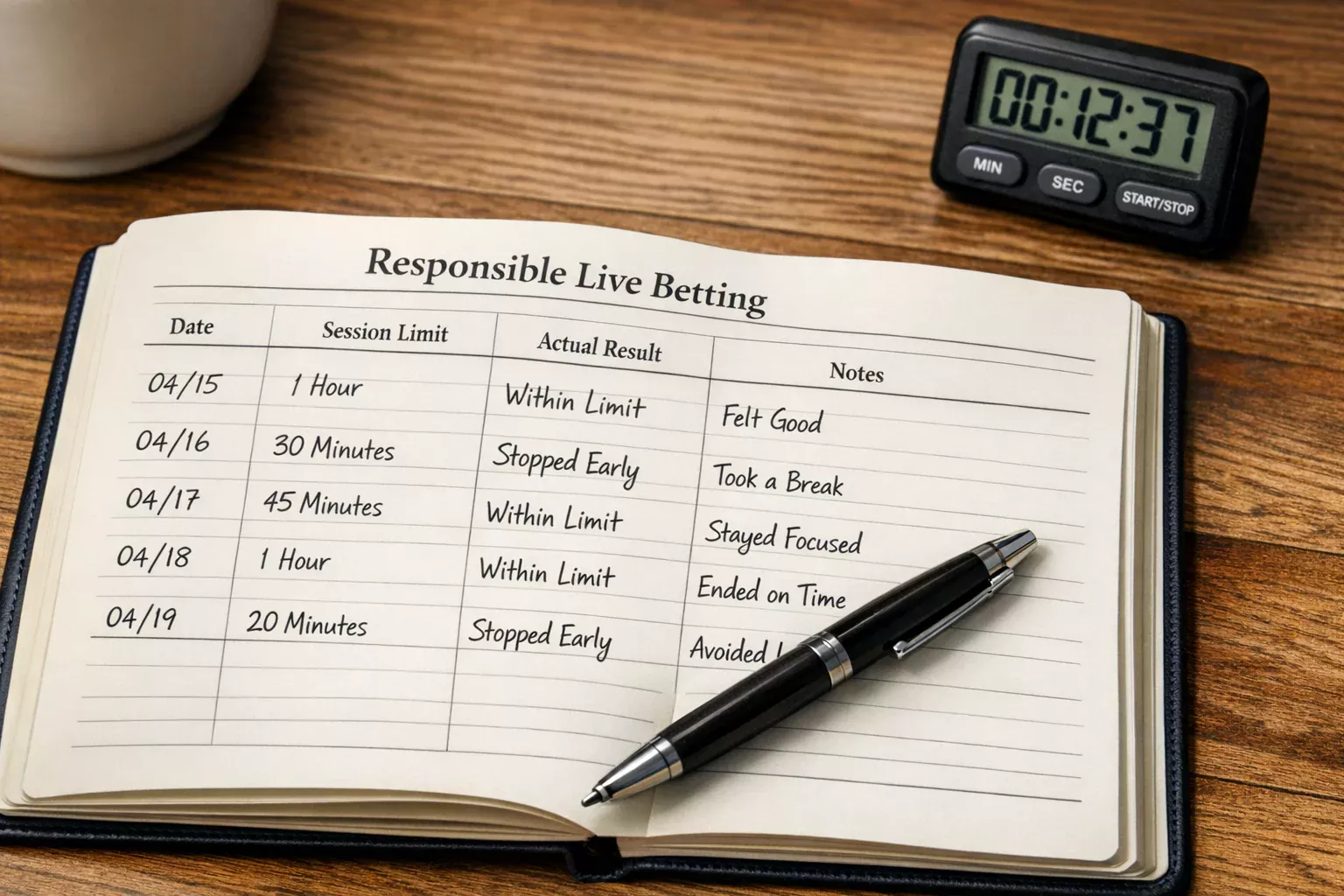
Session limits cap how much you can bet during any single game or betting session. Decide before games start what your maximum live betting exposure will be and stick to that limit regardless of how opportunities develop. A session limit of three units means you stop after three bets even if you see what appears to be a fourth compelling opportunity. These limits prevent the accumulation of losses that occurs when you keep betting to recover earlier results.
Time boundaries help you avoid the trap of betting on late games simply because they are available. Live betting on a 10 PM start when you need to wake up early the next morning leads to fatigue-impaired decision-making. Establishing cutoff times after which you do not bet live protects both your bankroll and your well-being. The games will be there tomorrow; your edge does not disappear if you skip a night.
Emotional check-ins during live betting help you recognize when your decision-making has become compromised. Periodically asking yourself whether you are betting based on analysis or emotion interrupts automatic behavior patterns. If you notice you are frustrated, excited beyond reason, or desperate to recover losses, stepping away from live betting for the rest of the night is the correct response. The discipline to stop when you are not in the right headspace defines sustainable gambling.
Bankroll segregation for live betting prevents it from consuming resources meant for other betting activities. Allocating a specific portion of your bankroll to live betting and tracking it separately provides clarity about whether your live betting is profitable or costly. Many bettors find that their live betting loses money while their pregame betting wins, which suggests reducing or eliminating live exposure. Without separate tracking, this pattern remains invisible.
Taking breaks between bets and between games gives your mind time to reset. The continuous nature of live betting encourages non-stop action, but your decision quality degrades with fatigue. Stepping away after each bet to evaluate whether you should make another, rather than immediately seeking the next opportunity, builds healthy habits that improve long-term results.
Conclusion
Live betting offers NHL fans an engaging way to interact with games in real time, transforming passive viewing into active participation. The dynamic nature of hockey, with its rapid momentum shifts and situational complexities, creates genuine opportunities for bettors who understand the sport deeply and can process information quickly. For those willing to invest the preparation and discipline required, live markets provide edges that pregame betting cannot match.
Success in live betting demands more than quick reactions. It requires pre-game preparation that identifies potential opportunities before they arise, real-time observation that captures information the odds cannot fully reflect, and emotional discipline that prevents excitement from overriding analysis. The bettors who profit from live markets combine all three elements consistently, betting selectively on situations where their edge is clearest rather than acting on every interesting game state.
The risks of live betting are real and should not be dismissed. Increased variance, emotional pressure, and the temptation to overtrade all work against bettors who approach live markets casually. Responsible gambling practices become even more important when the pace of action accelerates. Set your limits before games start, honor them regardless of how the action unfolds, and maintain honest records that reveal whether your live betting actually contributes to your results or detracts from them. Live betting can enhance your hockey wagering experience, but only if you approach it with the respect the format demands.
Live hockey betting at hockey betting.
