
Betting Strategy
 Available in US

Betting on hockey without a strategy is like playing goalie without pads. You might survive a few shots, but eventually the puck finds soft tissue. The NHL presents unique challenges that reward prepared bettors and punish those who wing it. Unlike football, where weekly games allow extensive preparation time, hockey’s demanding schedule creates constant opportunities for bettors who know what to look for and can act quickly on the information that matters.
The sports betting industry has matured considerably since widespread legalization began across the United States. Markets are more efficient than ever, meaning casual bettors face increasingly steep odds against sustainable profits. This does not mean winning is impossible, but it does mean that profitable hockey betting requires systematic approaches rather than gut feelings or team loyalty. The bettors who consistently beat the market are those who process information more effectively than the lines can adjust.
This guide presents proven strategies for betting on NHL games in 2026. You will learn the research fundamentals that separate winning bettors from losing ones, discover how advanced statistics can identify value the market misses, and understand situational factors that influence game outcomes in predictable ways. Strategy alone does not guarantee profits, but betting without strategy guarantees long-term losses. The goal is to put probability on your side through disciplined analysis rather than hoping luck carries you through.
See also advanced NHL betting strategies.
Research Fundamentals for Hockey Betting
Every successful hockey bet begins with research. The question is not whether to do research, but what information actually matters and how to process it efficiently. With 82 games per team during the regular season plus preseason and playoffs, NHL bettors face an avalanche of data. Knowing which data points deserve attention and which ones create noise is the first skill you need to develop.
Starting goaltenders represent the single most important piece of information for any NHL bet. Hockey is the only major sport where a single player can dominate outcomes to the degree that goaltenders do. The difference between an elite starter and a replacement-level backup can be measured in goals allowed per game, and that difference directly impacts both moneyline and puck line outcomes. Sportsbooks adjust lines based on expected goaltenders, but confirmations often come late, creating windows of opportunity for bettors who monitor team announcements closely.
Most NHL teams announce their starting goaltender during morning skates on game days, typically between 11 AM and 12 PM Eastern time. Bettors who can access this information quickly gain advantages over those who bet blindly the night before. When a team’s backup gets a surprise start, lines often move significantly as the market adjusts. If you already have a position at favorable odds, you benefit from information asymmetry. If you bet early without knowing the goaltender situation, you are essentially gambling on incomplete information.
Injury reports and lineup changes extend beyond goaltenders to impact game outcomes in measurable ways. Missing a first-line center or a top-pair defenseman changes how a team plays, though these effects are smaller than goaltender changes. The challenge lies in distinguishing between significant absences and ones the market already accounts for. When Connor McDavid misses a game, the line moves dramatically because everyone knows his impact. When a team’s third-line winger sits, the line barely budges because his absence rarely changes outcomes. Your research should focus on identifying middle-ground situations where important players are out but the market has not fully adjusted.
Schedule analysis reveals patterns that influence team performance in predictable ways. NHL teams play condensed schedules with frequent travel, creating fatigue factors that vary throughout the season. A team playing its fourth game in six nights performs differently than a rested team coming off three days between games. Road trips through multiple time zones affect West Coast teams visiting Eastern opponents and vice versa. These schedule-based factors do not guarantee outcomes, but they shift probabilities in ways that informed bettors can exploit.

Advanced Statistics That Matter
Raw statistics like goals and wins tell you what happened but not why. Advanced hockey statistics attempt to measure underlying performance that predicts future results more reliably than outcomes alone. Learning to interpret these metrics gives you analytical tools that most casual bettors lack, potentially revealing value in lines that appear accurate on the surface.
Corsi and Fenwick measure shot attempts to assess which team controls play. Corsi counts all shot attempts including blocked shots, while Fenwick excludes blocked shots. A team with 55% Corsi controls the majority of shot attempts, which correlates with long-term success even if short-term results vary. Teams that dominate Corsi but have poor records often regress toward their underlying performance, creating betting value when the market prices them based on results rather than process. Conversely, teams with strong records but poor possession metrics often decline as their luck normalizes.
These metrics become most useful when you understand their context. A team protecting a lead in the third period will intentionally cede possession while limiting quality chances, which tanks their Corsi numbers without indicating poor play. Score-adjusted and situation-adjusted versions of these metrics account for game state, providing cleaner signals about team quality. Close-game Corsi, which only measures periods when games are within one goal, often predicts future success better than raw totals.
Expected goals (xG) advances beyond shot quantity to measure shot quality. Not all shots are equal: a one-timer from the slot presents a much better scoring chance than a point shot through traffic. Expected goals models assign probability values to each shot based on location, type, preceding events, and other factors. A team’s xG difference (xGF minus xGA) reveals how they perform in terms of chance creation and suppression, independent of goaltending and finishing luck.
When a team significantly outperforms their xG, they are either exceptionally skilled at finishing or exceptionally lucky. Most of the time, it is luck, and regression follows. Betting against teams with inflated shooting percentages or unsustainably high save percentages can provide value, though timing the regression requires patience. The market often remains fooled by surface results for weeks before adjusting to underlying reality.
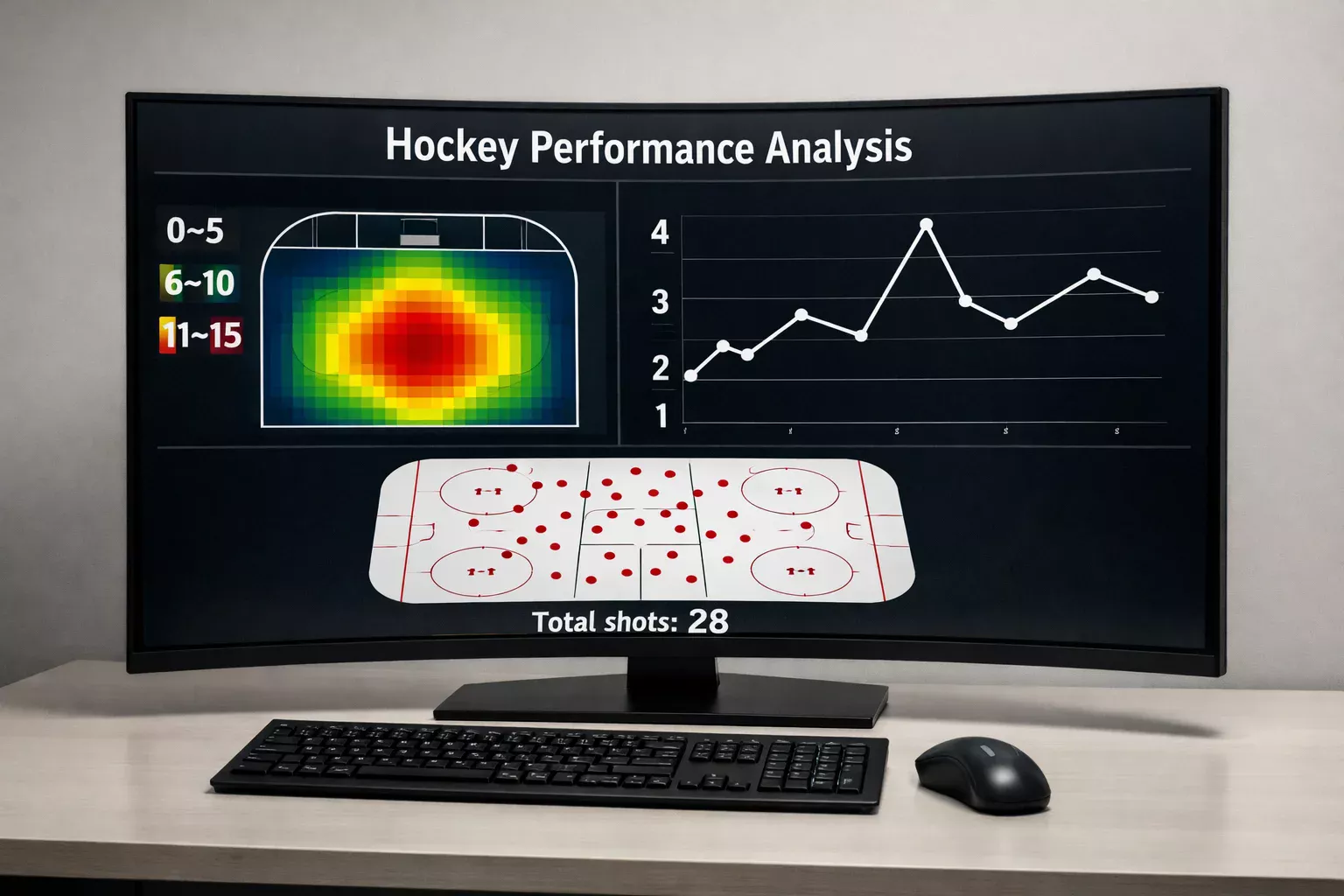
High-danger chances focus specifically on the most valuable scoring opportunities. These are shots from prime scoring areas with clear shooting lanes, typically defined by location relative to the net. A team dominating high-danger chances at both ends of the ice demonstrates superior territorial play that tends to persist. This metric cuts through the noise of shots from bad angles and perimeter play to identify teams that consistently create and suppress the chances most likely to result in goals.
Situational Betting Strategies
Beyond team quality metrics, specific situations create predictable performance patterns that sharp bettors exploit. These situational factors do not override talent disparities, but they can tip close matchups and provide edges in games where the market prices teams as near-equals.
Back-to-back games remain one of the most reliable situational factors in hockey betting. Teams playing the second game of consecutive nights perform worse on average than rested opponents. The effect is strongest when the back-to-back includes significant travel, such as playing in New York on Saturday and Chicago on Sunday. Fatigue compounds throughout the season, making late-season back-to-backs particularly punishing. The market accounts for this factor, but often incompletely, especially in mismatches where the tired team’s talent advantage masks their situational disadvantage.
The flip side of back-to-back situations involves teams with significant rest. A team coming off four or more days between games sometimes comes out flat, particularly early in the season when rust accumulates quickly. However, this effect is less reliable than back-to-back fatigue and varies considerably by team. Some clubs use long breaks to refocus and practice, while others struggle to regain game rhythm. Your research should track how specific teams perform in various rest scenarios rather than applying blanket assumptions.
Road trips and travel create cumulative fatigue that extends beyond individual back-to-back situations. A team on the fifth game of a six-game road trip faces challenges that single-game analysis misses. Players sleep in different beds every few nights, deal with time zone adjustments, and lack access to home facilities and routines. Performance typically degrades as road trips extend, with the final games of long trips producing the worst results. Bettors who track where teams are in their schedule rather than just their immediate rest situation gain informational advantages.
Divisional matchups present unique dynamics that differ from non-divisional games. Teams within the same division play each other frequently, creating familiarity that influences game flow and outcomes. Coaching staffs develop specific game plans for division rivals, reducing the impact of regular-season form. Divisional games also carry heightened intensity due to playoff implications and rivalry factors, sometimes producing closer results than talent disparities would suggest. These factors cut both ways: sometimes the better team wins comfortably, and sometimes the underdog rises to the occasion.

Value Betting Concepts
Finding value is the central goal of serious sports betting. Value exists when the probability implied by betting odds differs from the true probability of an outcome. If a team has 55% chance of winning but the odds imply only 50%, betting them provides positive expected value over time. The challenge lies in accurately estimating true probabilities, which no one does perfectly.
Understanding implied probability helps you identify potential value. American odds convert to implied probability through simple formulas. For favorites with negative odds, implied probability equals the odds divided by the odds plus 100, then multiplied by 100. For -150 odds, that calculation yields approximately 60% implied probability. For underdogs with positive odds, implied probability equals 100 divided by the odds plus 100, then multiplied by 100. For +150 odds, that yields approximately 40% implied probability.
Value betting requires developing probability estimates independent of the lines. If you only consider whether you like a team to win without quantifying that belief, you cannot determine whether the odds offer value. Saying “I think the Bruins will win” is not helpful. Saying “I think the Bruins have a 65% chance of winning, and the odds imply 58%” gives you something actionable. Building this skill takes practice and honest assessment of your past predictions, but it represents the core of profitable betting.
Closing line value provides an objective measure of betting skill. If you consistently beat closing lines, meaning the odds move in your favor between when you bet and when the game starts, you are likely making good predictions. The market aggregates enormous amounts of information and betting action, so consistently beating it indicates genuine edge. Track your bets against closing lines to assess your handicapping quality separately from variance-driven results.
Live Betting Strategies
In-game betting has grown dramatically as technology enables real-time odds adjustments. Live NHL betting offers opportunities that pregame markets cannot match, but also presents unique risks that catch unprepared bettors. Developing specific strategies for live betting complements your pregame approach and can improve overall results.
The fundamental principle of live betting involves identifying when current odds fail to reflect actual game state. If a team dominates possession and creates numerous scoring chances but trails due to a fluky goal, live odds might overvalue their opponent. Conversely, if a team leads despite being outplayed, taking the trailing team at improved odds captures value from the scoreboard’s misleading information. Shot attempt data, scoring chance quality, and game flow matter more than the score alone.
Momentum shifts create live betting opportunities that pregame analysis cannot anticipate. When a team scores to tie a game or takes their first lead, odds adjust dramatically. If your read suggests the goal against the flow of play and unsustainable, the market’s reaction may overshoot. Similarly, when a team falls behind in a game they control statistically, improved live odds can provide better value than pregame lines offered.
Power plays and penalty situations require quick evaluation for live betting. A team going on the power play sees their live moneyline and goal-scoring probabilities increase temporarily. If you believe their power play execution will succeed, live betting before the market fully adjusts can capture value. This requires understanding each team’s special teams tendencies and the specific game context, as not all power plays carry equal threat.
Live betting also allows strategic hedging and position management. If you have a pregame bet on a heavy underdog who takes an early lead, live betting the opponent can lock in profit regardless of the final outcome. This approach reduces variance and guarantees positive results when your initial read proves correct. The tradeoff involves sacrificing potential maximum profit for certainty, which suits different bankroll management philosophies.
Bankroll Management Principles
Strategy without bankroll management eventually fails. Even the sharpest bettors experience losing streaks that can devastate improperly sized bankrolls. Protecting your betting capital through disciplined stake sizing ensures you survive the inevitable downturns long enough for your edge to manifest in results.
Unit betting represents the foundation of sound bankroll management. A unit is a fixed percentage of your total bankroll that you risk on each bet, typically between 1% and 3% for recreational bettors. If your bankroll is $1,000 and you use 2% units, each bet risks $20 regardless of your confidence level. This approach prevents any single loss from significantly damaging your bankroll and ensures you can withstand extended losing periods.
Resist the temptation to vary unit sizes based on confidence. Bettors who bet “three units” on strong plays and “one unit” on speculative ones usually overestimate their ability to distinguish between the two. The plays you feel most confident about often involve games the market has efficiently priced, while your actual edge might exist in games where you feel less certain. Flat betting equal units on all plays removes overconfidence bias and produces more consistent results.
Bankroll growth and drawdown limits provide additional structure for long-term betting. As your bankroll grows, your unit size should increase proportionally, compounding gains over time. Conversely, if your bankroll shrinks significantly, you should reduce unit size to preserve capital. Setting drawdown limits prevents catastrophic losses: if your bankroll drops 20% from its peak, consider taking a break to reassess your strategy rather than chasing losses with larger bets.
Separating betting funds from everyday finances maintains proper perspective on risk. Money you bet on hockey should be money you can afford to lose entirely without affecting your life. This psychological distance allows rational decision-making rather than desperate attempts to recover losses. Bettors who mix betting funds with rent money inevitably make poor decisions driven by financial pressure rather than value assessment.
Regular Season vs Playoff Betting
NHL playoffs operate under different rules and dynamics than regular season games, requiring adjusted betting strategies. The intensity increases dramatically, home ice matters more, and fatigue factors shift in importance. Applying regular season assumptions to playoff games often leads to poor results.
Overtime rules change significantly between regular season and playoffs. Regular season overtime is five minutes of three-on-three play followed by a shootout if necessary. Playoff overtime is sudden death with traditional five-on-five hockey that continues until someone scores. This difference affects totals betting, as playoff games can produce significantly higher scoring through multiple overtime periods. Puck line dynamics also shift because playoff games cannot end in one-goal margins via shootout.
Best-of-seven series create unique handicapping considerations. As series progress, teams adjust to each other’s strategies, and matchup advantages become clearer. A team that wins Game 1 convincingly might face adjustments that make Game 2 closer. Goaltenders who struggle early can be pulled in favor of backups. Travel and rest patterns within series affect performance, with home teams generally performing better but long series favoring teams with travel advantages.
Emotional intensity and clutch performance matter more in playoffs than regular season. Some players elevate their games under pressure while others struggle with the increased stakes. Identifying these tendencies requires examining historical playoff performance beyond simple statistics. A player who scores 30 goals during the regular season but disappears in playoffs represents different betting value than one who maintains or improves his production when elimination is possible.
Playoff series betting offers alternatives to individual game wagering. Betting on which team advances allows you to express opinions about overall matchup quality without predicting specific game outcomes. These markets often provide better value than daily game odds because they require longer-term assessment that casual bettors find less appealing than immediate action.
Common Betting Pitfalls to Avoid
Awareness of common mistakes helps you avoid repeating them. Most unprofitable bettors fall into predictable patterns that sharp bettors learn to recognize and exploit. Understanding these pitfalls in yourself provides the first step toward eliminating them from your approach.
Overvaluing recent results leads bettors astray constantly. A team that wins four straight games appears hot, but those wins might result from favorable bounces and goaltending rather than improved play. Conversely, a team on a losing streak might be playing well and suffering bad luck that will reverse. Regression to underlying quality happens over time, meaning recent results often mislead rather than inform. Your analysis should emphasize process over outcomes to avoid results-oriented thinking.
Betting too many games dilutes your edge and increases variance. Sharp bettors focus on games where they identify clear value rather than betting every game on the schedule. If you find yourself with action on twelve NHL games in one night, you almost certainly lack genuine edges in all of them. Selectivity improves both results and attention quality, as focusing on fewer games allows deeper analysis of each opportunity.
Ignoring line movement forfeits information the market provides. When a line moves from -140 to -160, that movement indicates where sharp money is going. While you should not blindly follow line moves, understanding why they happen helps calibrate your own assessments. If your analysis favors one side but the line moves heavily against you, reconsidering your position before betting is wise rather than stubborn.
Emotional betting after losses represents the fastest path to bankroll destruction. After a tough loss, the urge to immediately place another bet to recover is strong but destructive. Taking a break, reviewing what went wrong, and approaching the next bet with fresh perspective leads to better decisions than chasing losses with increased stakes. Set rules for yourself about mandatory breaks after significant losses and honor them regardless of how you feel in the moment.

Putting Strategy Into Practice
Reading about strategy provides a foundation, but implementing it consistently determines your results. The gap between knowing what to do and actually doing it separates successful bettors from those who understand concepts but fail to apply them under pressure.
Start with tracking everything. Record every bet including your reasoning, the odds, the result, and any relevant context. After accumulating enough data, patterns emerge that reveal your strengths and weaknesses. Maybe you consistently find value in underdogs but lose money on favorites. Maybe your Tuesday bets perform better than weekends. Without detailed records, these insights remain hidden.
Develop your process before focusing on results. Early in your betting journey, measure success by whether you followed your system rather than whether individual bets won. Good process eventually produces good results, but short-term outcomes involve significant luck. A bet that follows sound logic but loses is better than a bet that ignores your criteria but wins, because only the former approach scales over time.
Stay humble and continue learning. The NHL evolves constantly, with teams hiring analysts and adopting new strategies that shift how games play out. What worked last season might not work this season. Remaining curious about new metrics, approaches, and information sources keeps your strategy current. The bettors who succeed long-term combine foundational principles with adaptive implementation.
Maintain perspective on what betting should be. Even with strong strategy and disciplined execution, betting remains entertainment with financial stakes. If you find yourself stressed, obsessed, or betting money you cannot afford to lose, step back and reassess your relationship with gambling. Sustainable betting enhances your enjoyment of hockey rather than turning every game into a source of anxiety.

Conclusion
Winning at NHL betting requires more than passion for hockey or willingness to risk money. It demands systematic approaches to research, analysis, and bankroll management that most casual bettors never develop. The strategies outlined in this guide provide frameworks for each component, but your implementation and adaptation determine ultimate success.
Start with research fundamentals: goaltender confirmations, injury reports, and schedule analysis form the information base for every bet you make. Layer advanced statistics on top to identify value the market misses and potential regression candidates. Apply situational awareness to recognize when circumstances favor one side beyond what talent comparison suggests. Develop rigorous value assessment skills to quantify your beliefs and compare them against implied probabilities.
None of this guarantees profits. Sports betting is inherently uncertain, and even the best strategies experience significant losing periods. What disciplined strategy does provide is the best possible chance of long-term success and the peace of mind that comes from knowing your decisions follow sound logic rather than random impulses. Whether you bet casually or pursue hockey betting seriously, approaching it strategically respects both your money and your time. The edge goes to those who prepare.
NHL betting strategy at hockey betting.
