
Live Betting on NHL Games: In-Play Strategies
 Available in US
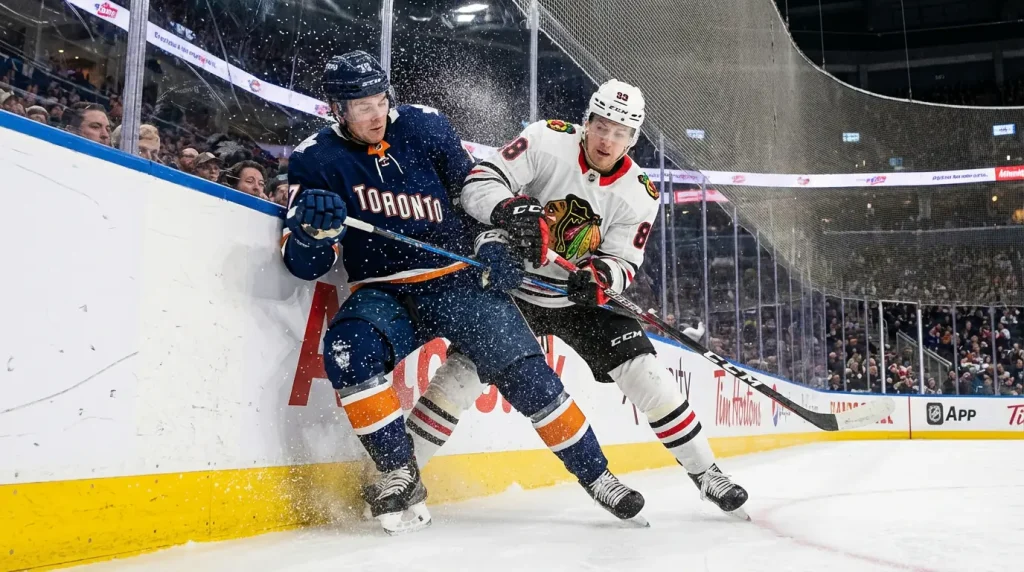
Live betting turns a hockey game into a market that moves in real time. The odds shift after every goal, every penalty, every goaltender change. You are not locked into a pregame analysis that may have been wrong from the opening faceoff — you are reacting to what is actually happening on the ice, adjusting your position as the game reveals itself. It is faster, more demanding, and more rewarding than any pregame wager, provided you know what you are looking for.
See also the live hockey betting guide.
How Live Betting Works in Hockey
When an NHL game starts, the pregame markets close and the live betting markets open. Sportsbooks use algorithms that recalculate odds continuously based on the game’s score, time remaining, and momentum indicators. The moneyline, puck line, and totals are all available in-play, along with period-specific markets and next-goal props.
The speed of adjustment varies by sportsbook, but most major books update their live odds within seconds of a goal being scored. If a game opens as a pick’em and the home team scores two minutes in, the live moneyline might immediately shift to something like -200 for the home team and +170 for the visitor. That shift represents the updated probability of each team winning given the new score and the time remaining.
Live betting also introduces markets that do not exist pregame. Next-goal scorer, period winner, and race-to-X-goals props all appear once the game is in progress. These short-duration markets settle quickly and offer frequent opportunities to engage with the game without waiting for the final buzzer.
One critical difference between live and pregame betting is the vig. Live lines typically carry a wider margin than pregame lines, because the sportsbook needs to protect itself against bettors who may be watching the game with information the algorithm has not yet processed. This wider juice means you need a bigger edge to be profitable live than you would pregame. It is the cost of real-time access, and you should factor it into every live decision.
How Odds Shift During a Game
NHL live odds are driven primarily by two factors: the current score and the time remaining. A 1-0 lead in the first period barely moves the needle compared to a 1-0 lead with five minutes left in the third. The nonlinear relationship between score, time, and win probability is what creates the interesting moments in live betting.
The biggest live odds swings happen in three situations. The first is early goals. A goal in the first five minutes of a game shifts the live moneyline significantly because the market has to reprice 55+ minutes of remaining hockey with one team already trailing. The second is goals that break a tie in the third period. A team that goes from tied to leading in the final frame sees its win probability spike — often to 80% or higher — because there is so little time left for the opponent to respond. The third is goaltender pulls. When a trailing team pulls their goalie in the final two minutes, the live odds for the leading team jump sharply because the probability of an empty-net goal sealing the game is substantial.
Understanding these inflection points is essential. Live betting is not about betting constantly — it is about identifying the moments where the market is likely to overshoot or lag behind reality, then acting decisively.
Key Moments That Create Live Value
The most profitable live betting opportunities tend to cluster around specific game events that the algorithm handles imperfectly. Penalties are a prime example. When a team takes a penalty and goes on the kill, the live odds adjust to reflect the increased scoring probability during the power play. But the adjustment is standardized — the algorithm does not fully account for the specific power-play unit on the ice, the penalty-kill structure of the defending team, or whether the power play has been struggling all night. If you know a team’s power play is operating at 30% this month versus the 22% the algorithm assumes, there is an edge.
Momentum shifts after a fight or a big hit are another area where human observation beats algorithmic pricing. The algorithm does not track energy. It does not know that a team just had a line brawl that fired up their bench, or that a star player took a heavy but legal check and has been visibly favoring one side since. These are real-game factors that influence the next 10 minutes of play, and the live market does not price them in.
Coaching decisions — timeout usage, line matching, pulling the goalie earlier than expected — also create pockets of value. A coach who pulls his goaltender with three minutes remaining instead of the standard 90 seconds changes the expected scoring dynamics for that window. If you are watching closely, you can bet the leading team’s live puck line before the book adjusts to the extended empty-net situation.
Live Betting Strategies That Work
The most reliable live strategy in NHL betting is backing strong teams that fall behind early. When a legitimate Cup contender goes down 1-0 in the first period, the live moneyline shifts enough to offer plus-money or near plus-money on a team that was a clear pregame favorite. If nothing fundamental has changed — same goaltender, no injuries, no major penalty trouble — the early deficit is often just noise. Strong teams erase one-goal deficits regularly, and the live market gives you a better price than you would have gotten pregame.
A second strategy is betting the under after a high-scoring first period. If a game produces four goals in the opening 20 minutes, the live total for the remaining two periods often stays inflated because the algorithm extrapolates the early scoring pace. But hockey does not work that way. Coaches make adjustments, goaltenders settle in, and the pace typically slows after a chaotic opening frame. If the game was a track meet in the first period, the under on the second and third period combined total can offer genuine value.
The third approach is targeting the live puck line after a two-goal lead is established. When a team goes up 2-0, their live puck line might sit at -1.5 at even money or short plus-money. Historically, teams that take a two-goal lead in the NHL win by two or more goals in a significant percentage of those games, partly because of the empty-net goal dynamic. If the leading team has a strong defensive structure and the trailing team lacks offensive depth, the -1.5 live puck line becomes an attractive play.
Each of these strategies requires discipline. You need to be watching the game, not betting blind from a phone notification. Live betting rewards attentiveness and punishes impulsivity, and the line between the two is thinner than most bettors admit.
Mistakes That Kill Live Bettors
The most destructive mistake in live betting is chasing. You lose a pregame bet, the game is still in progress, and you start firing live wagers trying to recover. This is not a strategy — it is a reaction, and the sportsbook is designed to exploit reactive bettors. The wider live vig compounds every bad decision, and a two-bet losing night turns into a five-bet disaster.
A second common error is betting too frequently. Live markets offer hundreds of opportunities per game, and the constant availability creates a psychological pull to stay engaged. But most of those opportunities carry negative expected value. The bettor who places one well-timed live bet per game will outperform the one who places six on instinct over the course of a season. Selectivity is not optional — it is the entire framework.
Ignoring the vig is the third mistake. Pregame moneylines might carry a 4-5% margin. Live moneylines can carry 8-10% or more, especially during fast-moving game situations. That difference means your read on the game needs to be substantially correct — not just slightly correct — to overcome the house edge. If you would not bet the pregame line at a wider vig, do not bet the live line just because you feel momentum shifting.
Finally, be cautious about live betting on your phone without watching the game. Score notifications are delayed. Context is absent. You cannot see that the trailing team has been dominating possession for the last eight minutes and is about to tie the game. Live betting without a live feed is like driving without a windshield — technically possible, but you are going to hit something you did not see coming.
The Real-Time Edge
Live betting is the closest thing the sports betting world offers to trading a financial market. Prices move, information flows, and the bettors who process that information fastest gain an advantage. It is not for everyone. It demands focus, emotional control, and the ability to make rapid decisions without second-guessing yourself into paralysis.
But for the bettor who thrives in that environment, live NHL betting is the most engaging market in sports. Every shift on the ice is a data point. Every penalty, every line change, every glove save alters the probability distribution ever so slightly. The question is whether you can read those shifts faster and more accurately than the algorithm behind the sportsbook’s live feed. On the nights when you can, the returns are worth every second of attention you invested.
Live NHL in-play betting strategies at hockey betting.
