NHL Three-Way (60-Minute) Betting Guide
 Available in US
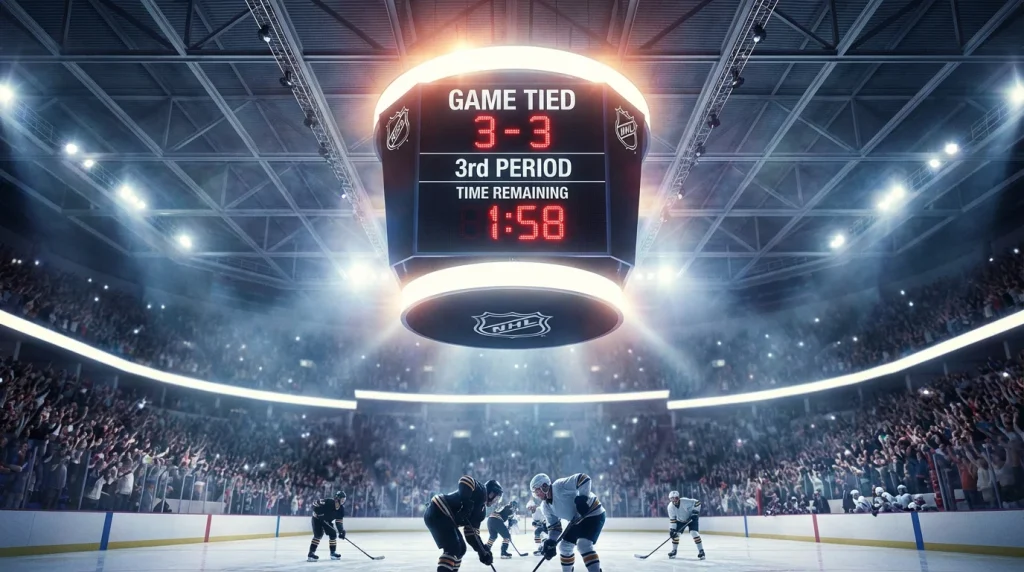
Most hockey bettors are trained to think in two outcomes: this team wins, or that team wins. The three-way line introduces a third possibility — the draw. In 60-minute betting, overtime and shootouts do not count. The bet settles on the score at the end of regulation, and if the game is tied after three periods, the draw is the winning result. This fundamentally changes how you evaluate a game, because you are no longer asking “who wins?” but “who wins in 60 minutes, or does nobody win at all?”
See also does overtime count in NHL betting.
What 60-Minute Betting Is
A three-way or 60-minute moneyline offers three options: Team A wins in regulation, Team B wins in regulation, or the game ends in a draw after 60 minutes. Unlike the standard two-way moneyline, which includes overtime and shootouts and guarantees a winner, the three-way line treats a tie at the end of regulation as a distinct outcome with its own odds.
This market is standard in European soccer betting but less familiar to North American bettors. Sportsbooks that cater to hockey bettors offer it as an alternative to the two-way moneyline, and it is available on most major platforms. The odds are structured differently from the two-way line because the total probability is now distributed across three outcomes instead of two.
On a typical three-way line, both teams are priced longer than they would be on the two-way moneyline. If the two-way line has Team A at -150 and Team B at +130, the three-way line might show Team A at +110, Team B at +220, and the draw at +280. The prices are longer across the board because each team’s probability of winning in regulation is lower than their probability of winning outright (which includes overtime). The draw absorbs a meaningful portion of the total probability, typically between 20% and 25% on any given NHL game.
That 20-25% draw probability is not a number sportsbooks invented. It reflects reality. Roughly one in four NHL games is tied after regulation, with the exact figure fluctuating year to year. This high frequency of ties is what makes the three-way market viable and interesting — the draw is not a fringe outcome, it is a routine occurrence.
How the Draw Changes the Math
The draw option restructures the value proposition entirely. On a standard two-way moneyline, you are choosing between two outcomes and paying the vig on that binary split. On the three-way line, you have access to a third outcome that the two-way market ignores, and that outcome is priced at attractive odds.
Consider a game between two evenly matched teams. The two-way moneyline might price both sides at -110, with the sportsbook taking its cut from the vig. The three-way line for the same game might show Team A at +155, Team B at +170, and the draw at +270. The draw at +270 implies roughly a 27% probability, but if the true probability is closer to 25%, the difference is the sportsbook’s margin on the draw. If the true draw probability is closer to 28% — possible in a matchup between two elite defensive teams with strong goaltending — the draw at +270 becomes a value bet.
This math is the core appeal of the 60-minute market. The draw gives you access to a frequently occurring outcome at odds that can exceed +250, which means you do not need it to hit even a third of the time to be profitable. If you can identify the games where the draw probability is highest — and there are clear indicators for this — the three-way market offers an edge that the two-way line cannot provide.
The games most likely to end in a draw after regulation share common characteristics. They tend to feature two evenly matched teams, strong goaltending on both sides, low-event defensive systems, and a total of 5.5 or lower. Divisional matchups later in the season, where both teams know each other’s systems intimately, also trend toward regulation ties at a higher rate. These are not exotic conditions — they describe a significant portion of the NHL schedule on any given night.
Three-Way Odds Structure
Understanding how three-way odds relate to two-way odds is essential for comparing value across markets. The two-way moneyline gives you a better price on the favorite because the favorite’s win probability includes overtime wins. The three-way line gives you a better price on the underdog — in regulation terms — because the underdog’s two-way moneyline includes overtime and shootout wins that pad their overall win rate.
For favorites, the three-way line is typically worse value than the two-way moneyline. The favorite needs to win in regulation, and their price shortens less than you might expect because the draw is absorbing probability from both sides equally. For underdogs, the three-way line can be better value if you believe the underdog has a real chance of winning in regulation rather than surviving to overtime and winning there.
The practical takeaway is that the three-way market is most useful for two types of bettors: those who want to bet the draw as a standalone play, and those who want better prices on underdogs they believe will win outright in 60 minutes rather than needing extra time.
When the 60-Minute Line Offers Value
The draw is the unique weapon of the three-way market, and it offers the best value in games that the data points toward low scoring and competitive balance. Start by identifying matchups where both teams rank in the bottom half of the league in goals per game or where both starting goaltenders are performing above league average. These games are structurally more likely to be tied after 60 minutes because neither team has a significant offensive advantage, and the goaltending on both sides suppresses scoring.
Divisional games in the second half of the season are another fertile ground for draw bets. By February and March, divisional opponents have played each other multiple times and have detailed scouting reports on each other’s breakout patterns, power-play entries, and defensive zone coverage. Familiarity breeds tight games. The scoring in late-season divisional matchups tends to be lower than in early-season meetings, and the draw rate ticks upward as a result.
Games involving teams fighting for playoff positioning also trend toward draws. When the stakes are high and both teams need points, the style of play becomes more conservative. Neither side wants to make the mistake that costs them the game, which produces cautious hockey with fewer goals and more games decided in overtime. If both teams are within a few points of a playoff spot in late March, the draw at +270 or +280 is often the most undervalued outcome on the board.
The flip side is knowing when to avoid the draw. Games featuring a clear talent gap — a top-five team hosting a bottom-five team — are less likely to be tied after regulation because the better team scores early and controls the game. Blowouts and comfortable two-goal leads are more common in these mismatches, which reduces the draw probability below the 20% threshold where the odds become profitable. If the game looks lopsided on paper, the three-way draw is not where your money should go.
Strategy for the Three-Way Market
A disciplined three-way betting strategy treats the draw as a selective play, not a nightly habit. You are looking for specific conditions — competitive matchups, strong goaltending, low totals, high-stakes situations — and only betting when the posted draw odds exceed your estimated probability.
A simple framework works well. Estimate the draw probability for a given game based on the factors above. If your estimate is 26% and the posted odds imply 24% (around +315), the draw has value. If your estimate is 22% and the posted odds imply 25% (around +300), the draw is overpriced and you should pass. The margin does not need to be enormous — a 2-3% edge on a bet that pays nearly 3-to-1 compounds quickly over a full season.
You can also use the three-way market to take positions on teams rather than draws. If you believe an underdog will win outright and the two-way moneyline is +140, but the three-way regulation line on that same underdog is +200, the three-way bet offers a bigger payout at the cost of excluding overtime wins. If your analysis suggests the underdog’s strengths — speed, transition offense, a goaltender who steals games — are the kind that produce regulation wins rather than overtime survivals, the three-way price is the better bet.
Combining draw bets with other positions is another approach. Some bettors will bet the draw on the three-way market and simultaneously bet one team on the two-way moneyline, creating a hedge that covers multiple outcomes. This is an advanced tactic that requires careful sizing to ensure positive expected value across the combined position, but it allows you to profit from the draw without being fully exposed if one team wins in regulation.
The Overlooked Outcome
The three-way market exists in the shadow of the standard moneyline, and most casual bettors never look at it. That is precisely why it can be profitable. Markets with less liquidity and less public attention are more prone to inefficiency, because the sportsbook invests fewer resources in sharpening the odds and the betting public does not pound the line into shape the way they do on the two-way moneyline.
For the bettor willing to do the homework — tracking draw rates by matchup type, monitoring goaltender performance, and estimating regulation-time probabilities — the three-way line is a market hiding in plain sight. The draw is not glamorous. Nobody brags about betting a tie. But in a sport where a quarter of all games end in a deadlock after 60 minutes, ignoring an outcome that frequent — and that well-compensated by the odds — is leaving value on the table. And in betting, value left on the table is value donated to the sportsbook.
NHL 3-way 60-minute betting at hockey betting.
