
Player Props
 Available in US

Player prop betting has transformed how fans engage with NHL games. Instead of simply picking winners, you can now bet on whether Connor McDavid records a point, whether a goaltender makes over 28.5 saves, or whether a defenseman blocks at least three shots. These granular markets let you leverage specific knowledge about players and matchups in ways that traditional betting cannot accommodate. For bettors willing to do the research, player props offer some of the softest lines in hockey betting.
The explosion of prop betting coincides with the growth of legal sports betting across North America. Sportsbooks have responded to customer demand by expanding their NHL prop offerings dramatically. What once consisted of basic goalscorer markets now includes dozens of statistical categories for every game. This proliferation creates opportunities because books cannot set every line with the same precision they apply to moneylines and totals. Some props carry significant edge for bettors who understand the underlying statistics better than the linemakers.
This guide walks you through the complete landscape of NHL player prop betting in 2026. You will learn which prop categories offer the most value, how to research player performance effectively, and which strategies separate winning prop bettors from those who treat these markets as entertainment. Props reward detailed knowledge and punish lazy assumptions, making them ideal for hockey fans who pay attention to the nuances that casual observers miss.
See also the complete player prop bets guide.
Types of Player Props Available
Understanding the full range of available props helps you identify which markets suit your analytical strengths. Different prop categories require different research approaches and carry different levels of betting edge. Familiarizing yourself with the complete menu allows you to focus your efforts where they are most likely to pay off.
Goals and assists represent the most traditional player props. You can bet on whether a player scores at least one goal (anytime goalscorer), records at least one assist, or combines for a certain number of points. These markets are generally efficient because they attract the most betting action and receive the most attention from oddsmakers. Finding value in goal and assist props requires identifying situations where the market underestimates a player’s chances based on matchup, usage, or recent form.
Points props aggregate goals and assists into a single total, typically set at over/under 0.5 for most players or 1.5 for elite scorers expected to produce multiple points. The aggregation actually creates different dynamics than betting goals and assists separately. A player might be unlikely to score but likely to rack up assists on a power play unit, making his points prop more attractive than his goal prop even at the same implied probability.
Shots on goal have become one of the most popular prop categories because the statistical base is larger than goals or assists. A player who averages three shots per game generates a meaningful sample even over a small stretch of games. Shots on goal props typically set lines at 2.5, 3.5, or 4.5 depending on the player’s shooting frequency. These markets reward bettors who track deployment patterns, as players with increased ice time or power play usage tend to exceed their typical shot totals.
Blocked shots offer a niche market that most casual bettors ignore entirely. Defensemen and certain defensive forwards accumulate blocked shots at predictable rates based on their role and playing style. Because these props attract less betting action, the lines are often less sharp than goals or shots props. Bettors who track blocked shot rates and understand which matchups produce more blocking opportunities can find consistent value in this overlooked category.
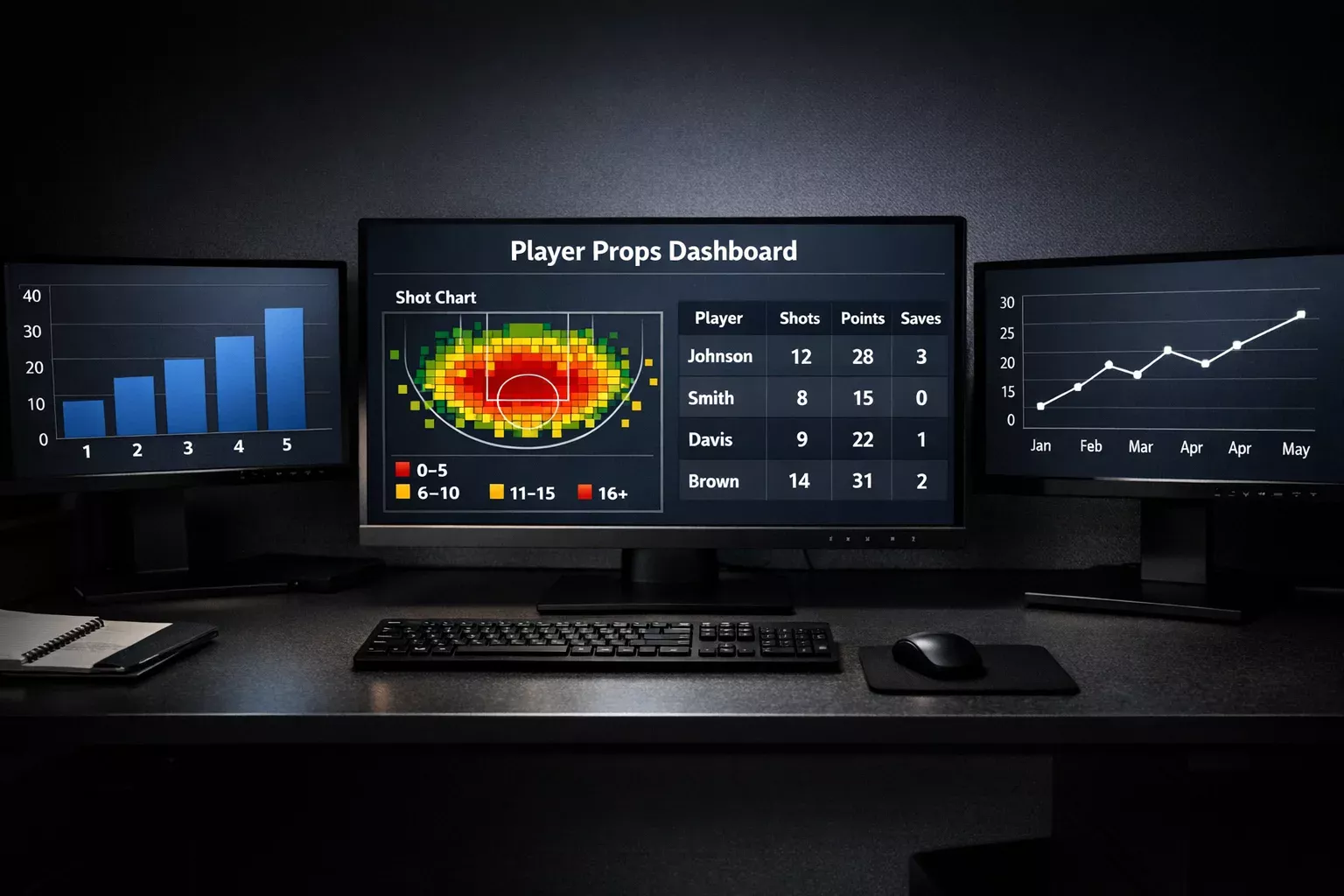
Goaltender saves round out the major prop categories, with lines typically set based on expected shots against. A goalie facing a high-volume offense might have a saves line at 32.5, while one facing a low-event team might sit at 24.5. These props essentially ask you to predict game flow: will this game feature lots of shots, or will it be a tight-checking affair? The challenge lies in the prop accounting for both team shooting rates and your selected goaltender’s expected workload.
Anytime Goalscorer Betting
The anytime goalscorer market deserves special attention because it represents the most popular player prop in hockey betting. Betting a player to score at least one goal is straightforward and exciting, creating natural appeal for recreational bettors. This popularity comes with both opportunity and challenge.
Anytime goalscorer odds vary dramatically based on the player. Elite snipers like Auston Matthews or Leon Draisaitl might be priced around -120 to +100, reflecting their near-coin-flip probability of scoring in any given game. Middle-six forwards typically sit between +200 and +350, while fourth-liners and defensemen rarely known for scoring can reach +500 or higher. Understanding what these prices imply about scoring probability helps you assess where the value lies.
The key to profitable anytime goalscorer betting involves identifying undervalued situations rather than simply backing the best goal scorers. A first-line winger priced at +180 might offer better value than a superstar at -110 if the winger draws a favorable matchup against a weak defensive pair. Similarly, a player returning from injury whose scoring ability the market has forgotten might present value that his recent stat line obscures.
Power play usage dramatically affects goalscoring probability. Players who operate in the bumper position or as the one-timer threat on their team’s top power play unit score at elevated rates compared to their even-strength production. When betting anytime goalscorer, consider not just a player’s overall goal rate but specifically how much power play exposure he receives. A player with modest five-on-five numbers but premium power play deployment can offer sneaky goalscorer value.
Empty net situations also factor into anytime goalscorer calculations. Teams protecting leads in close games often deploy their top scorers when the opponent pulls their goalie. An elite forward on a team favored to win has slightly elevated goalscoring probability simply from empty net exposure. This edge is small but real, and it compounds with other factors to shift true probabilities away from what the market implies.
First Goalscorer Markets
First goalscorer betting offers massive payouts but carries correspondingly high variance. Predicting who scores the opening goal requires not just identifying likely scorers but also projecting who will be on the ice for early scoring chances. This market tests the limits of handicapping skill while providing entertainment value that few prop categories match.
Odds for first goalscorer typically start around +700 for the most likely candidates and extend past +5000 for unlikely options like backup goaltenders or fourth-line defensive specialists. The long odds attract bettors hoping to hit a big payout, but the market is notoriously difficult to beat consistently. Most winning first goalscorer bets involve significant luck regarding which line happens to be on the ice when the first goal opportunity materializes.
Strategies for first goalscorer betting focus on increasing your probability above what the odds imply rather than simply picking likely scorers. Players who start games on the ice have a structural advantage: they are guaranteed to be present for the opening faceoff and early action. First-line players and top power play options start most games, giving them more exposure to early scoring opportunities. Checking which players typically start games for each team provides an edge the market does not fully price.
Power play opportunities in the first period also affect first goalscorer probabilities. If you believe a game will feature an early penalty, players on the visiting or home team’s top power play unit become more attractive first goalscorer candidates. Some teams take more early penalties than others based on their aggressive forechecking style or discipline issues. Factoring these tendencies into first goalscorer analysis adds another layer of edge.
The high variance in first goalscorer markets makes them unsuitable for serious bankroll building but perfect for small-stakes entertainment betting. Treat these bets as lottery tickets rather than investments: fun to hit when they come through, but not something to chase or overweight in your betting portfolio.
How to Research Player Props
Successful prop betting demands more research than moneyline or totals wagering because you are handicapping individual performance rather than team outcomes. The good news is that player data is more accessible than ever. The challenge lies in knowing which data matters and how to apply it efficiently.
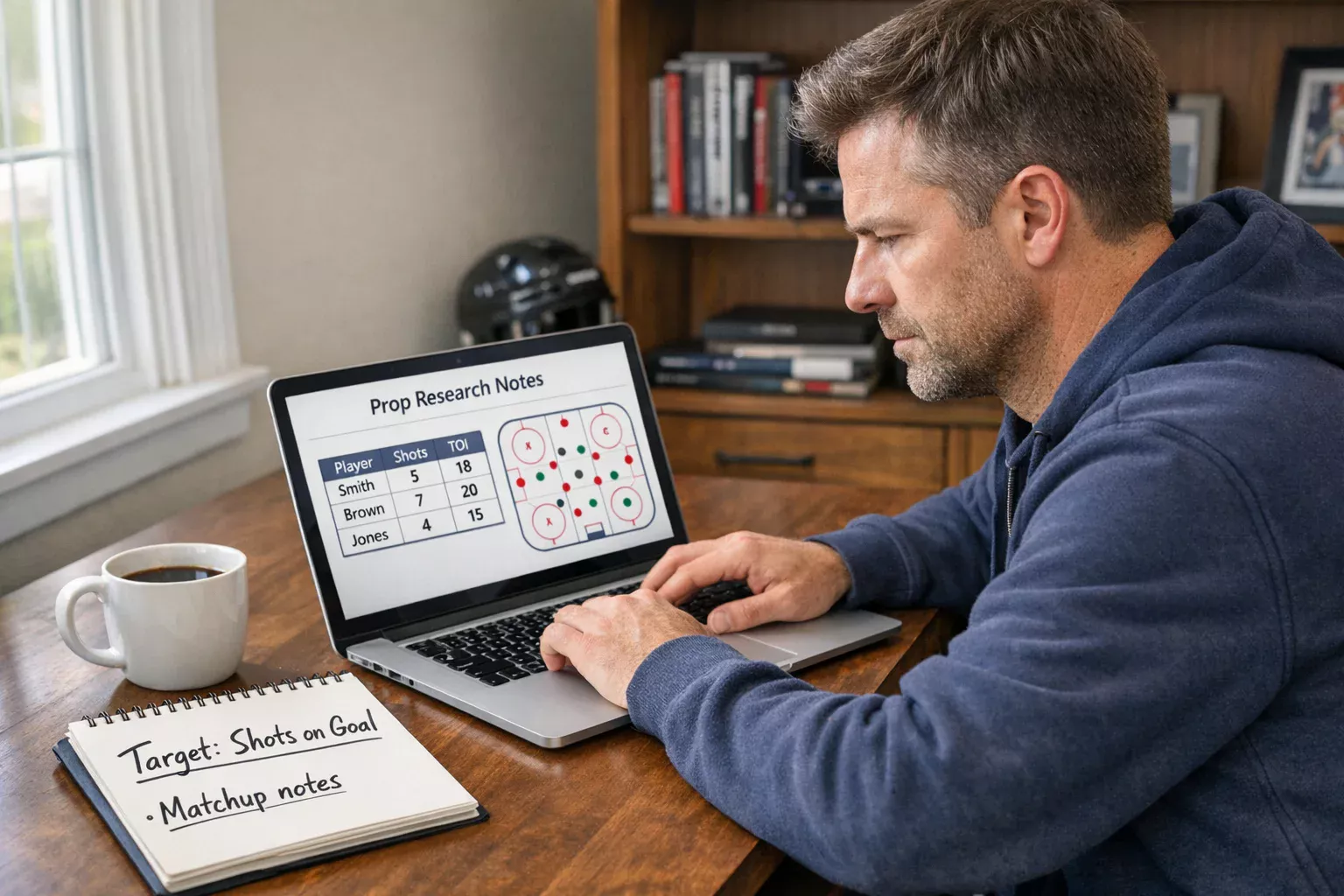
Start with baseline statistical rates for any player you consider betting. If you want to bet a player over 3.5 shots on goal, you need to know his average shots per game over a meaningful sample. A player averaging 2.8 shots is a poor candidate for over 3.5 unless specific circumstances suggest elevated shooting. A player averaging 4.1 shots is a reasonable candidate whose prop comes down to price and situational factors. Establishing these baselines prevents you from betting blindly based on name recognition alone.
Ice time projections matter enormously for rate-based props. A forward who plays 18 minutes per game generates more shots, hits, and blocked shots than one who plays 12 minutes, all else being equal. Monitoring line combinations and deployment patterns reveals which players might see elevated or reduced ice time in a given game. A player moving up from the third line to the second line due to injury should produce counting stats at a higher rate than his season average suggests.
Opponent tendencies create matchup-based adjustments to baseline projections. Some teams allow more shots than others, making over bets on shots props more attractive. Some teams block more shots than others, making blocked shot unders worth considering. Some goaltenders face fewer shots because their team dominates possession, making saves props lower than you might expect based on the opposing offense’s reputation. Incorporating opponent data refines your projections beyond simple player averages.
Recent form provides context that season averages miss, but requires careful interpretation. A player on a four-game scoring streak might be genuinely hot, or he might be experiencing positive variance that will regress. A player in a scoring slump might be snake-bitten despite creating chances, or he might be genuinely struggling with diminished opportunity. The key is examining underlying metrics like shot attempts and scoring chances rather than just outcomes. Sustainable improvements in opportunity should affect your projections; lucky or unlucky bounces should not.
Advanced Statistics for Prop Betting
Beyond basic counting stats, advanced metrics provide deeper insight into player value for prop betting purposes. These statistics attempt to measure performance quality and opportunity independent of outcomes, revealing which players are likely to sustain production and which are due for regression.
Individual expected goals (ixG) measures the quality of shots a player takes regardless of whether they score. A player with high ixG but lower actual goals is either unlucky or a poor finisher; either way, the underlying shot quality suggests goals should follow if the opportunity continues. Conversely, a player significantly outperforming his ixG might be finishing at an unsustainable rate that will regress. For goalscorer props, comparing ixG to actual goals reveals which players the market might misprice.
Individual Corsi and Fenwick measure how many shot attempts occur when a player is on the ice. Players who drive positive shot differentials tend to accumulate personal counting stats at elevated rates because their team controls play during their shifts. A player with strong individual possession metrics is likely to see more shots, more scoring chances, and ultimately more points than one who spends his shifts defending in his own zone.
Zone starts indicate where on the ice a player typically begins his shifts. Players who receive offensive zone starts begin more shifts in the attacking end, giving them natural advantages in creating scoring opportunities. Players tasked with defensive zone starts face harder circumstances that suppress their offensive production. Adjusting your expectations based on deployment context helps identify which players receive favorable assignments that prop lines might not fully reflect.
Power play statistics deserve isolation from even-strength numbers because the two contexts differ dramatically. A player’s power play points per 60 minutes reveals his productivity specifically in man-advantage situations, which matters for props since power play time creates concentrated scoring opportunities. Some players produce almost exclusively on the power play; others generate more evenly across situations. Understanding this split helps you assess how power play opportunities in a given game might affect a player’s prop prospects.
Team Props Explained
Beyond individual player props, sportsbooks offer team-level props that focus on collective performance rather than individual statistics. These markets provide alternative betting opportunities when you have opinions about how games will unfold but lack conviction on specific players.
Team total goals props set over/under lines for how many goals a specific team will score. Unlike game totals that combine both teams, team totals isolate one side’s offense. This distinction matters when you believe one team will dominate scoring regardless of their opponent’s output. A team facing a backup goaltender might exceed their team total even if the game stays low-scoring overall because the other team struggles offensively.
First team to score markets offer even-money alternatives to the higher-variance first goalscorer props. Rather than picking which player scores first, you simply pick which team scores first. These markets typically hover near even odds with slight juice on each side based on perceived advantage. Sharp bettors analyze faceoff win rates, first period scoring rates, and starting lineup tendencies to find edge in first team to score markets.
Winning margin props ask you to predict not just who wins but by how much. You can bet a team to win by exactly one goal, by two goals, or by three or more goals. These markets offer higher payouts than moneylines while requiring less precision than exact score betting. If you have strong conviction about a blowout or a tight game, winning margin props let you express that view more specifically than simply betting the moneyline or puck line.
Shutout props focus on whether a team will fail to score at all. Betting a team to be shut out pays longshot odds because scoreless games are rare, but they happen more often than the odds sometimes suggest against elite goaltenders in defensive matchups. Conversely, betting against shutouts (essentially betting a team to score at least one goal) offers short odds with high probability of success. Some bettors build parlays around multiple teams scoring at least once.
Game Props and Derivatives
Game props focus on specific aspects of how a game unfolds rather than individual or team statistics. These markets let you bet on events that might not directly affect the final score but still carry predictive elements worth analyzing.
Overtime props ask whether a game will reach extra time. Regular season NHL games go to overtime roughly 23-25% of the time historically, making the over on overtime props a clear underdog at typical prices around +300. However, certain matchup characteristics produce higher overtime rates: evenly matched teams, strong goaltending on both sides, and low-event defensive systems all correlate with tight games that reach overtime more frequently. Identifying these situations can provide edge in overtime markets.
Period betting isolates individual 20-minute segments of the game. You can bet moneylines, totals, and puck lines for each period separately. First period betting rewards analysis of how teams start games, since some clubs consistently outscore opponents early while others are slow starters. Third period betting incorporates empty net dynamics and game state, as teams protecting leads play differently than teams chasing. Each period carries its own tendencies worth studying.
Race to X goals markets ask which team will reach a specified goal total first (typically 2 or 3 goals). These props combine elements of team total betting with first-to-score dynamics. A team favored to score more goals overall should be favored in race markets, but early game dynamics and scoring patterns create variance that team totals do not capture. Some teams consistently score in bunches; others spread their goals evenly throughout games.
Both teams to score props pay out if both teams score at least one goal in the game. Shutouts are rare enough that this prop hits at a high rate, meaning the odds are typically short. The value lies in identifying games where shutouts are more likely than usual based on elite goaltending matchups or extremely lopsided talent gaps. Fading both teams to score in those spots can offer value at long odds.
Same-Game Parlays with Props
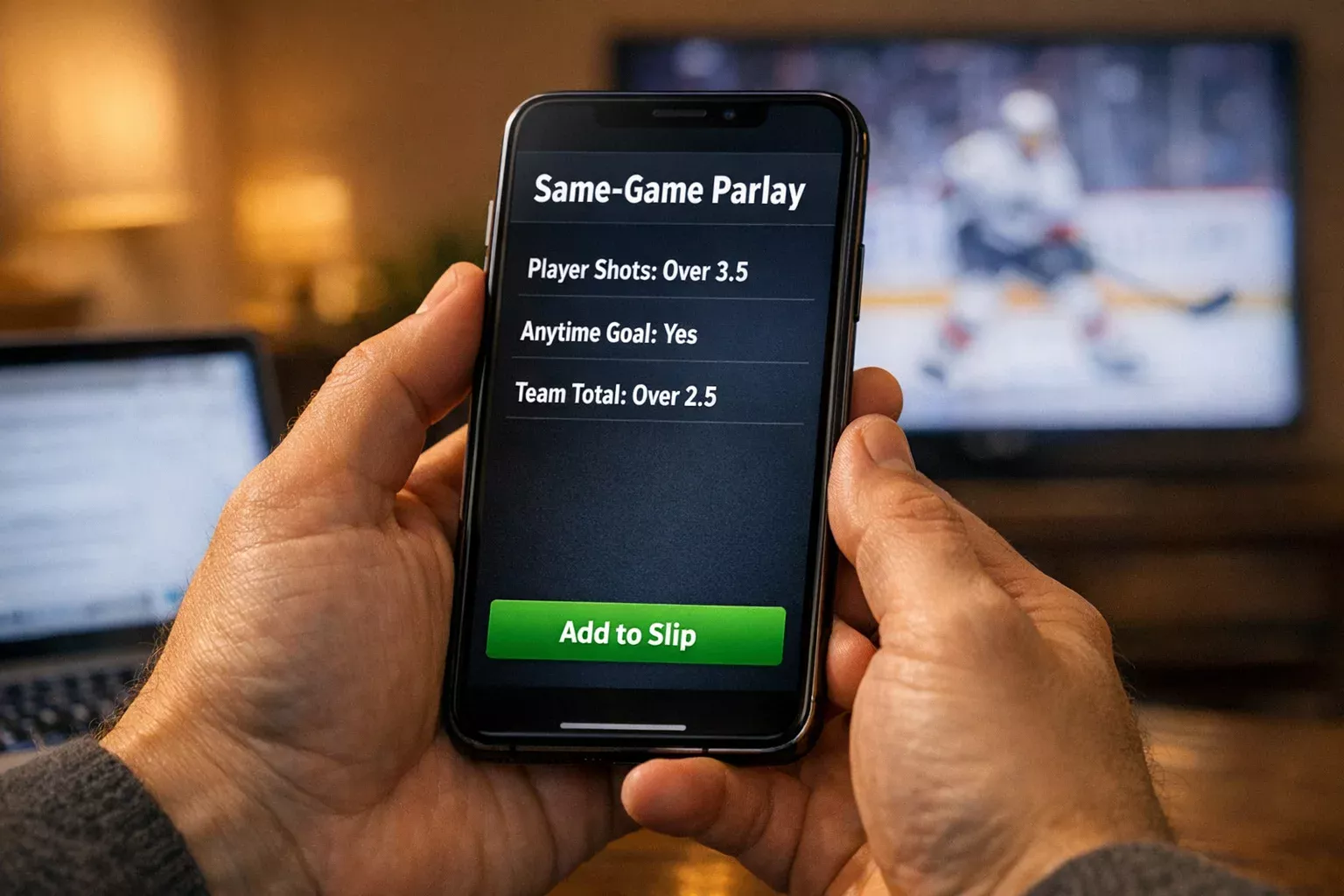
Same-game parlays (SGPs) combine multiple prop bets from a single game into one wager with multiplied odds. These bets have become enormously popular because they offer big potential payouts while focusing attention on a single game. Understanding how to construct SGPs intelligently separates profitable bettors from those who simply chase longshots.
Correlation represents the most important concept in SGP construction. Some outcomes naturally occur together: if a team wins by multiple goals, their top scorer probably recorded points. If a game goes to overtime, both teams probably scored, and the total probably hit the over. Sportsbooks attempt to account for correlation in their SGP pricing, but they cannot perfectly capture every relationship. Finding positively correlated outcomes that the book underprices creates value.
Negative correlation destroys SGP value and should be avoided. Betting a goaltender to make over 35 saves while also betting the under on total goals makes little sense because high save totals require lots of shots, which typically correlates with higher scoring. Similarly, betting a player to score while betting his team to be shut out creates internal contradiction. Review your SGP legs to ensure they tell a coherent story about how the game might unfold.
Leg selection should prioritize props where you have genuine edge rather than simply adding legs to inflate odds. Two well-researched props with positive expected value create a better SGP than five random selections that simply look good together. The multiplication of odds in SGPs means that each losing leg kills the entire bet, so every component must carry its own merit. Resist the temptation to add speculative legs just because they increase the potential payout.
SGP sizing should reflect their increased variance compared to straight bets. Even a well-constructed SGP requires multiple outcomes to hit simultaneously, which happens less often than any individual leg. Betting smaller amounts on SGPs than on straight bets maintains bankroll stability while still allowing participation in these entertaining markets. Treat SGPs as supplements to your betting portfolio rather than its foundation.
Prop Betting Strategies
Consistent profitability in prop betting requires systematic approaches rather than intuition or team fandom. Several strategic frameworks have proven effective for bettors who treat props as a serious analytical exercise.
Line shopping matters even more for props than for mainstream markets. Different sportsbooks set prop lines using different models, creating discrepancies that rarely exist for moneylines or totals. A player might be +130 to score at one book and +150 at another. These gaps represent pure value for bettors with accounts at multiple books. Developing a habit of checking three or four books before placing any prop bet significantly improves your long-term returns.
Specialization helps you develop expertise that generalists lack. Rather than trying to handicap every prop category, focus on one or two areas where your knowledge and data access provide advantages. Some bettors specialize in shots on goal props because they track deployment patterns closely. Others focus on goaltender saves because they understand opponent shooting tendencies deeply. Concentrated effort produces better results than scattered attention across too many markets.
Fading public favorites often provides value in prop markets because casual bettors gravitate toward star players and scoring props. When everyone bets McDavid to score, the book adjusts his odds to protect themselves, potentially making lesser-known players better values. Similarly, over bets on scoring props attract more action than unders, sometimes pushing lines past fair value. Contrarian thinking helps identify spots where public money has moved lines into your favor.
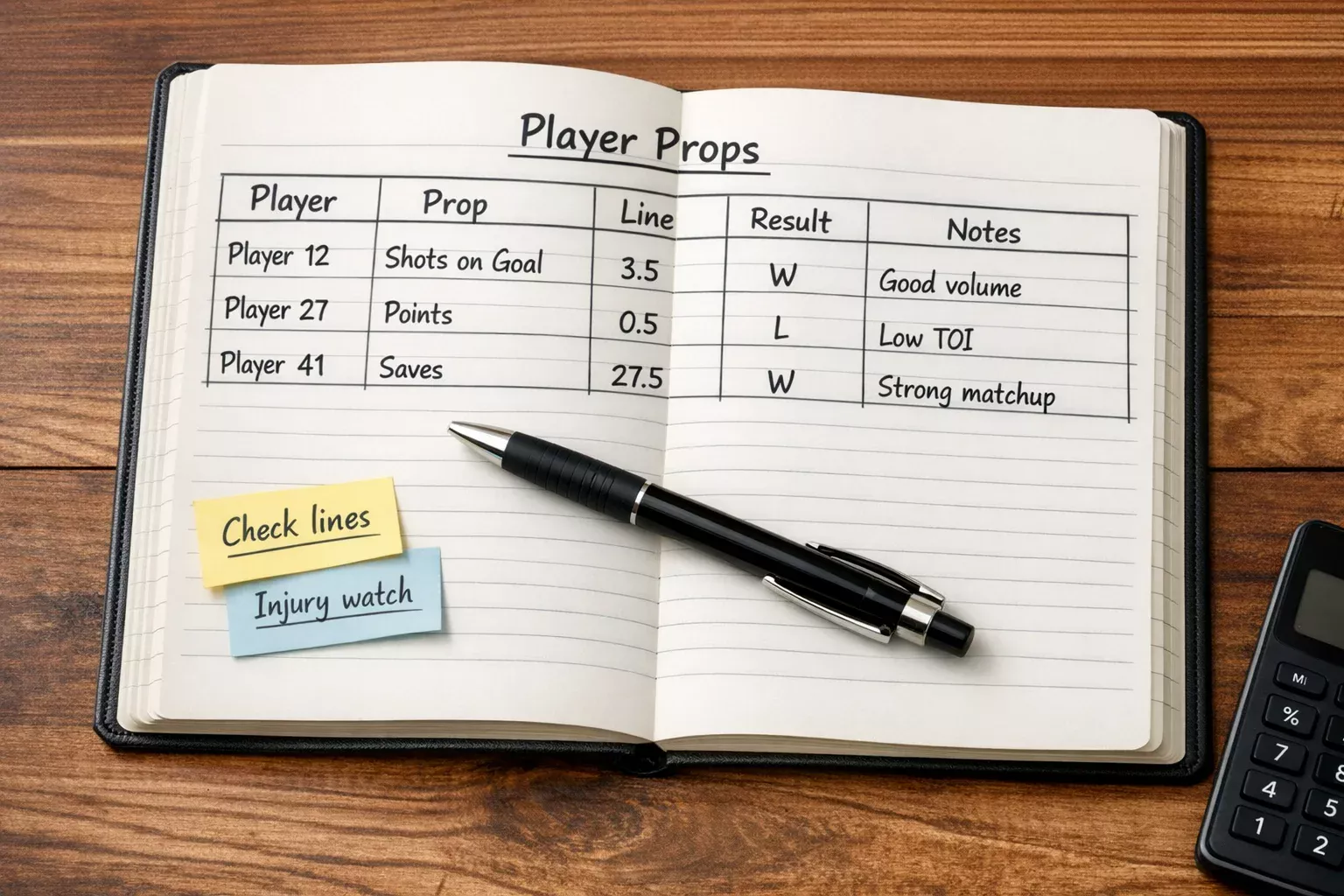
Tracking and adjustment closes the feedback loop on your prop betting. Record every bet including your reasoning, the line you got, and the outcome. After accumulating enough data, patterns emerge: maybe you consistently find value in shots props but lose money on goalscorer bets. These insights allow you to double down on strengths and eliminate weaknesses from your approach. Without tracking, you are guessing about your own performance rather than knowing it.
Conclusion
Player prop betting offers NHL fans a way to engage with games at a granular level that traditional betting cannot match. Every shift, every shot, every save becomes potentially meaningful when you have action on individual performance. This engagement comes with genuine betting opportunity for those willing to do the analytical work, as prop markets remain less efficient than mainstream lines.
Success in prop betting rewards specific knowledge and disciplined research. Understanding baseline statistics, adjusting for matchups and deployment, and incorporating advanced metrics all contribute to identifying value. The variety of available props means you can focus your efforts on categories that match your analytical strengths while avoiding areas where you lack edge.
The strategies in this guide provide a framework for approaching NHL props intelligently. Apply line shopping to capture the best prices, specialize in areas where your knowledge is deepest, and track your results to refine your approach over time. Props will not make you rich overnight, but consistent application of sound principles can turn your hockey knowledge into betting returns. The puck drops every night during the season, and with it, hundreds of prop betting opportunities for those prepared to find them.
NHL player props at hockey betting.
