
NHL Game Props: Period Betting and Specials
 Available in US
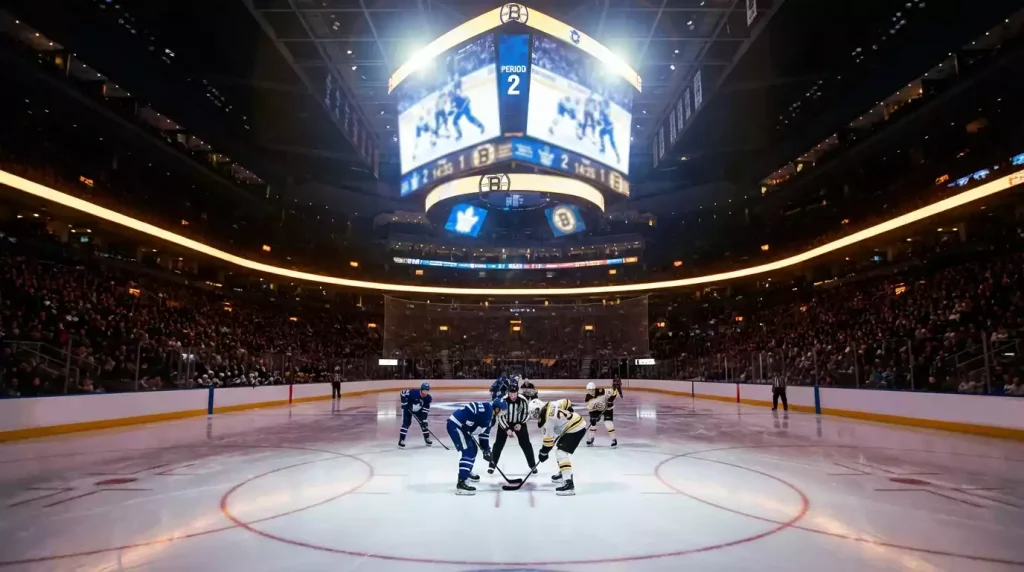
Game props zoom into the internal structure of a hockey game. Instead of betting on who wins or how many goals are scored overall, you are wagering on what happens within specific segments — which team leads after the first period, whether the game goes to overtime, what the score is at a particular moment. These markets break a 60-minute contest into smaller, more manageable puzzles, and each puzzle has its own set of data, tendencies, and pricing quirks that the attentive bettor can exploit.
See also NHL team props guide.
First-Period Betting
The first period is the most popular segment for game prop betting, and for good reason: it behaves differently from the rest of the game. Scoring in the first period is lower than in the second or third, partly because teams are still feeling each other out and partly because coaches are less willing to take offensive risks early. The average first period in the NHL produces roughly 1.5 to 1.8 total goals, compared to 2.0 or more in the second and third periods.
This scoring pattern makes the first-period total a distinct market with its own dynamics. The standard line sits at 1.5, with the under typically juiced to -130 or heavier. On sportsbooks that offer a 0.5 first-period total, the over is almost always a massive favorite because scoreless first periods — while not uncommon — are still the minority. The 1.5 line is where the real betting action lives, and it is where bettors who track first-period scoring tendencies at the team level can find an edge.
First-period moneyline betting — which team is leading after 20 minutes — is a three-way market with the draw as the most common result. As mentioned in the team props context, roughly 40-45% of first periods end tied. The draw is routinely available at +190 to +220, which represents an implied probability of 31-34%. When the true probability is closer to 42%, the draw is structurally underpriced. This is one of the most persistent edges in NHL prop markets, and it persists because recreational bettors prefer to pick a side rather than bet on a tie.
Beyond the draw, first-period moneyline betting rewards knowledge of which teams dominate the opening frame and which teams concede early. A team that has won the first period in 14 of their last 20 games is not just hot — they likely have a structural advantage in deployment, preparation, or offensive system that produces fast starts. Conversely, a team that has lost the first period in 12 of 20 games may have a slow-starting goaltender, a defensive system that takes time to settle, or a coach who rests his top line early and ramps up later.
Correct Score Betting
Correct score is the most granular and most difficult game prop market. You are predicting the exact final score — not just who wins and by how much, but the specific numbers. The sportsbook posts odds for every plausible scoreline, from 1-0 to 6-5 and beyond, with the most common outcomes (2-1, 3-2, 3-1) carrying the shortest odds and the outlier scores (7-3, 8-5) carrying the longest.
The correct score market is inherently high-variance. Even the most likely scoreline in an NHL game — typically 3-2 or 2-1 — occurs in only 10-12% of games. That means you are wrong 88-90% of the time even when you pick the most probable outcome. The appeal is the payout: correct scores often pay +700 to +1200, which means one correct pick covers a string of misses if the price is right.
Approaching correct score bets systematically requires a solid estimate of each team’s expected goals and an understanding of goal distribution. If you project Team A to score 3.1 goals and Team B to score 2.3, the most probable scorelines cluster around 3-2 and 4-2, with 2-1 and 3-3 as secondary options. Cross-referencing your expected goals estimate with the posted correct score odds can occasionally reveal a scoreline that is priced too generously relative to its actual probability.
Will the Game Go to Overtime?
The overtime prop is a simple yes/no market: will the game be tied after 60 minutes of regulation? Typical odds sit around +300 to +380 for yes and -400 to -500 for no, reflecting the roughly 20-23% probability of overtime in any given NHL game.
The factors that push a game toward overtime are the same factors that push the three-way draw into value territory: competitive balance, strong goaltending, defensive structure, and low-event pace of play. Divisional matchups, games between playoff contenders, and contests featuring two starting goaltenders with above-average save percentages all carry an elevated overtime probability.
Where this market gets interesting is in the pricing variance across sportsbooks. Some books price the overtime yes at +260 while others have it at +300 for the same game. That 40-cent spread represents a meaningful difference in expected value, and the bettor who compares multiple books before taking the overtime prop ensures they are capturing the best available price on a binary outcome.
Strategy for Game Props
Game props reward specialists. The bettor who tracks first-period scoring tendencies across all 32 teams has an informational advantage that the sportsbook’s algorithm — which relies on league-wide averages — cannot fully replicate. The bettor who understands overtime probability at a matchup-specific level, rather than the blanket 22% baseline, can identify the nights when the overtime prop is mispriced.
The foundation of a game prop strategy is a database. Start building one early in the season: track first-period results (win, loss, draw) for every team, along with the first-period total goals. After 25-30 games, the data stabilizes enough to be predictive. A team that has tied the first period in 50% of its games is not going to suddenly start winning the first period 60% of the time — their defensive posture and pacing tendencies are baked into their system.
Use this database to filter the nightly slate. On a night with eight games, your data might flag two or three where the first-period draw is significantly more likely than the posted odds suggest. Those are your bets. The other five games, where the data does not reveal a clear divergence from the market, are games you skip. This selective approach is the only sustainable path to profitability in prop markets, where the temptation to bet every game is strong and the consequences of overbetting are unforgiving.
For overtime props, combine the general factors — competitive balance, goaltending quality, defensive structure — with historical matchup data. Some team pairings produce overtime games at a rate well above the league average. Divisional rivals who split the season series 2-2 with three of the four games going to overtime are telling you something about how those specific teams match up. The sportsbook may not fully price that matchup history into the overtime prop, especially early in a new season.
Correct score bets should be treated as occasional high-conviction plays rather than a nightly habit. The variance is too high and the hit rate too low to bet them consistently. Reserve correct score wagers for games where your model produces a clear favorite scoreline with a probability that exceeds the implied probability of the posted odds by a meaningful margin — 3% or more. One or two correct score bets per week is sufficient; more than that, and you are feeding the sportsbook’s edge rather than exploiting the market’s errors.
Niche Markets and Seasonal Patterns
Beyond the standard game props, some sportsbooks offer niche markets that create occasional opportunities. Race-to-two-goals, highest-scoring period, and even/odd total goals are among the more exotic options. These markets carry wider vigs and less liquidity, which makes them harder to beat consistently. But the reduced attention from both the sportsbook and the betting public also means the pricing is less refined.
Race-to-two-goals is particularly interesting in games where one team has a significant offensive advantage. If a high-powered team is hosting a weak defensive opponent with a backup goaltender, the race-to-two bet on the home team may offer value because the probability of them reaching two goals first is higher than the posted odds imply. The market treats both teams as having roughly proportional chances scaled to the moneyline, but offensive firepower and goaltending quality can skew the race-to-two probability more dramatically than the overall win probability.
Seasonal patterns also influence game prop markets. Early in the season — October and November — scoring tends to be slightly higher and game scripts more volatile, as teams settle into their systems and goaltenders find their rhythm. This elevated scoring favors the over on first-period totals and increases the probability of higher correct scores. Late in the season, when playoff positioning tightens and teams play more conservatively, the under and the draw become more profitable in period betting markets. Tracking these seasonal shifts and adjusting your game prop approach accordingly is a small but cumulative edge.
Inside the Game
Game props invite you to watch hockey with a different eye. Instead of tracking the final score, you are tracking the rhythm — the ebb and flow of a game within its 60-minute structure. Which team controls the first period? When does the game open up? Does the trailing team have the personnel to force overtime, or will the leader slam the door?
These questions transform passive viewing into active analysis, and the answers you develop over a full season become the foundation of an edge that the casual bettor never builds. Game props are not the simplest markets on the board, and they are not the most forgiving. But for the bettor who invests the time to understand their internal mechanics, they offer something the main markets increasingly do not: room to be smarter than the line.
NHL game props and period betting at hockey betting.
